Rust Stains Need the Right Treatment, Not More Pressure

If you have tried pressure washing those orange-brown streaks off your driveway or siding and nothing changed, that is because rust is not dirt. It is a chemical bond between iron and the surface, and no amount of water pressure will break it. Out here on the Delmarva, the most common source is iron-rich well water running through your sprinkler system. Every watering cycle deposits a little more iron, and by the end of the season you have got a layer of orange that looks like it showed up overnight.
The good news is the right chemistry can break that bond and lift the iron out. Clean Power Wash treats rust stains with the specific chemical each surface needs, not one product for everything. We know which surfaces can take aggressive treatment and which ones need a lighter hand.
Call (410) 251-0928 to get your staining assessed and quoted before it sets in any deeper.
Surfaces We Treat With Precision

Concrete Driveways, Patios, and Flatwork
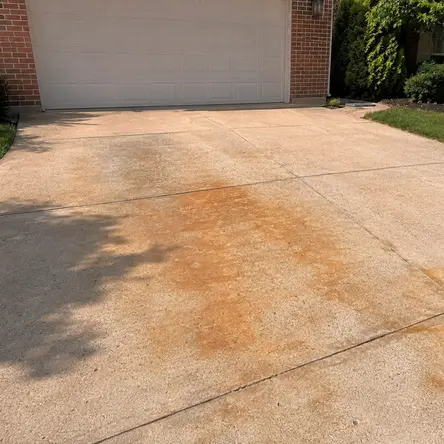
Concrete is where we see rust staining most often. The porous surface absorbs iron deposits over time, and the longer the iron sits, the deeper it bonds. The well water sprinkler pattern across the North Salisbury subdivisions is the most concentrated source we see, but metal patio furniture legs, iron-containing fertilizer washed by rain, and corroding rebar near the surface all contribute.
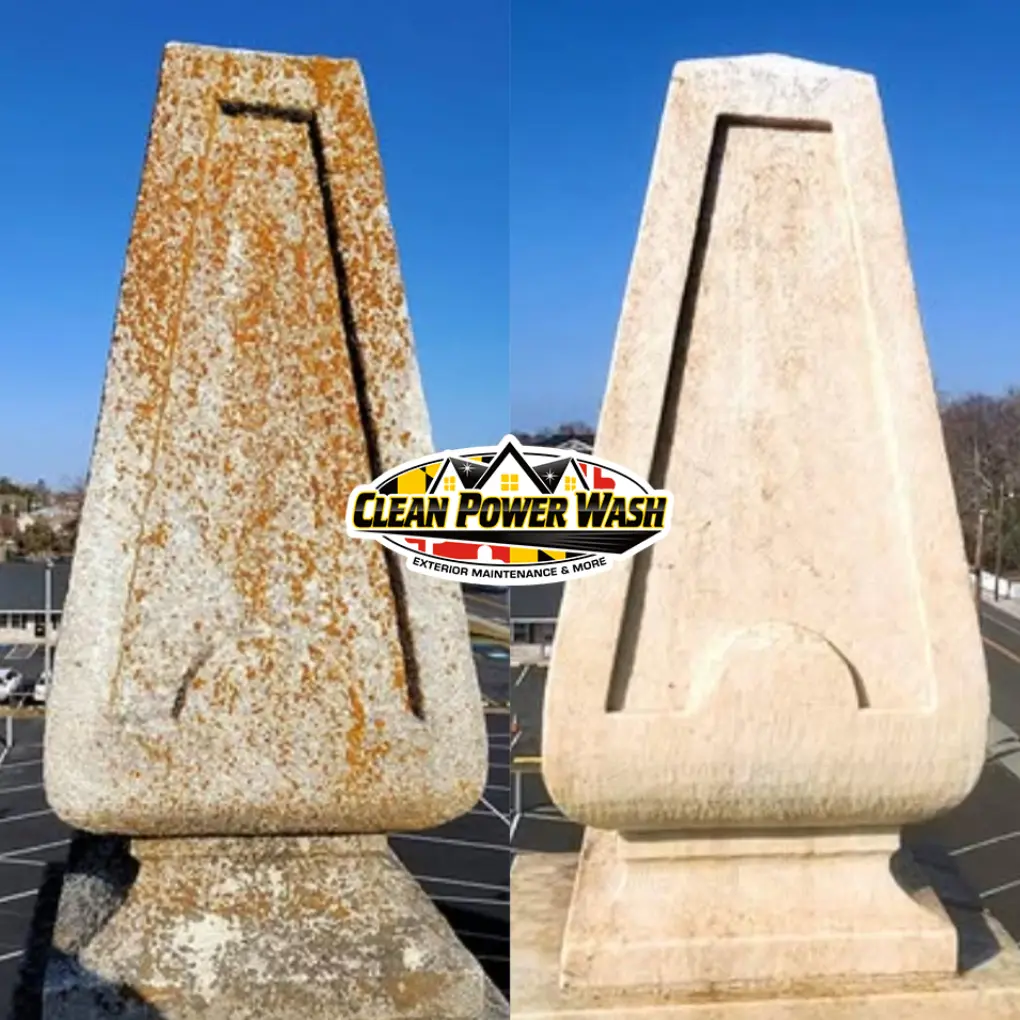
The result after treatment depends on the age of the stain. Fresh rust from a single irrigation season or a recently placed piece of furniture often comes fully clean. Stains from years of chronic iron deposition will show significant improvement but may retain some shadow in the deepest pores.
Siding and Oxidation
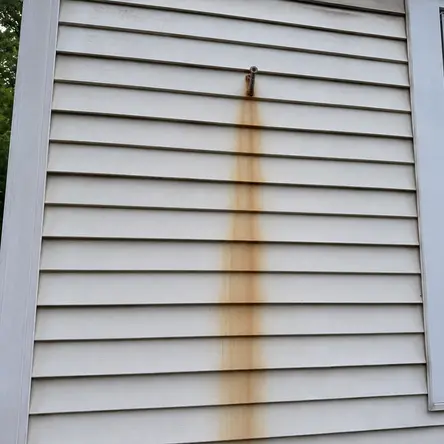
Orange-brown iron streaks appear on vinyl siding and painted wood trim when sprinkler overspray hits the lower courses repeatedly or when corroding metal fixtures bleed down the surface below them. A related service is oxidation removal on metal and aluminum siding, where the surface itself has developed a chalky oxidation layer from UV and weathering. For both, we use a test-spot approach: multiple chemicals are tested on a small area first to identify which solution works best on that specific surface before treating the full area.
Brick, Wood, and Other Surfaces
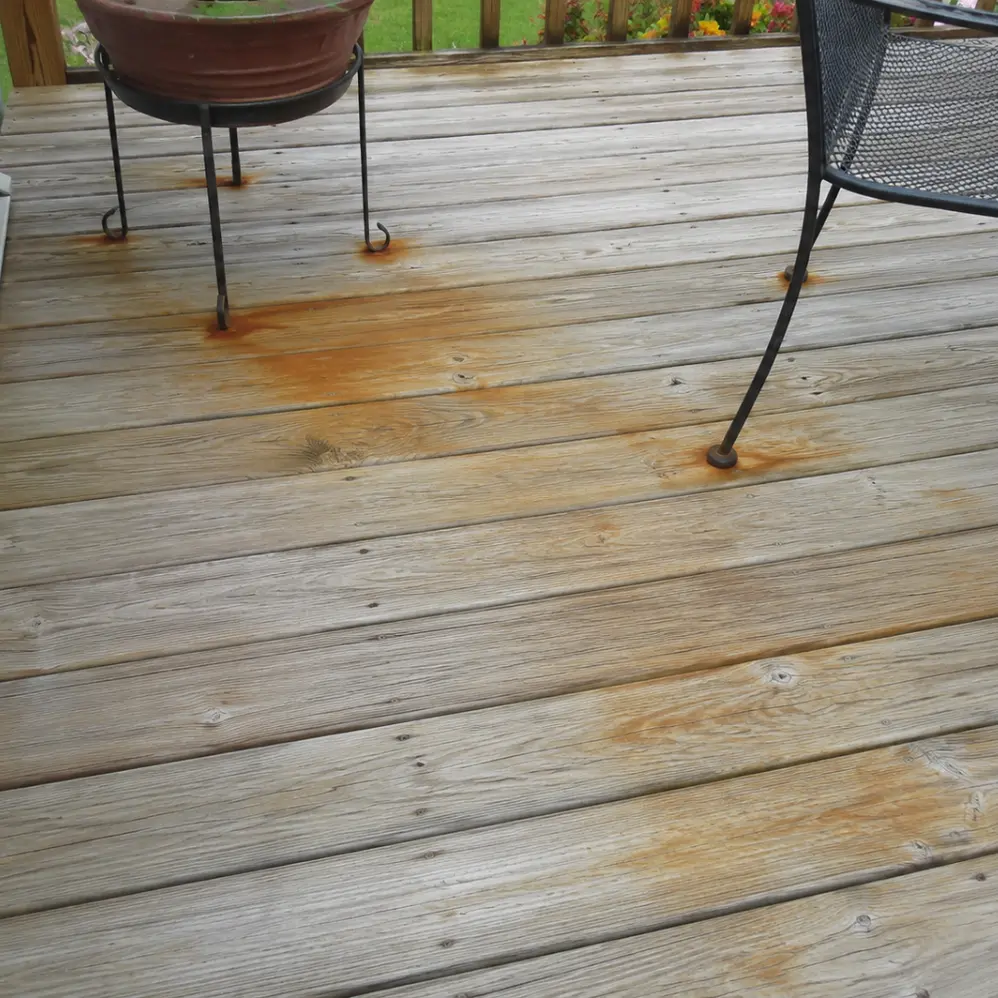
Rust stains also appear on brick stoops and walkways from aging cast-iron railings and metal downspouts, which is common in the Newtown and Camden corridors. They show up on wood decking from metal furniture and on pavers from sprinkler overspray. We assess rust staining on a range of surfaces using the same test-spot protocol. Call to discuss your specific situation and we will let you know what we can do.
Why Homeowners Call Us for Rust Removal
We Test Before We Treat
Rust removal is not a one-product job. Different surfaces, different iron sources, and different stain ages respond to different chemistry. Before we commit to treating the full area, we apply the candidate chemical to a small test spot and confirm it is actually working on your specific surface. An operator who shows up with one product and sprays it on everything is guessing. We do not guess.
Both Prices Before We Start
Because the difficulty of rust removal depends on factors that only become clear once the chemical is applied, we quote both scenarios upfront. The homeowner knows the easy-lift price and the scrubbing-required price before a single drop of chemical touches the surface. Most stain removal disputes in this industry start because the contractor quoted a low price for what they assumed would be easy and then discovered it was hard. Quoting both numbers upfront prevents that entirely, and it means the homeowner can decide whether they want to proceed with the higher number or stop at the first treatment.
We Are Straight About What This Service Can Do
A company that promises complete rust removal on every job is setting the homeowner up for disappointment. Rust is a penetrating stain. Fresh stains from the last few weeks or months respond dramatically and often come fully clean. Stains that have been building up for years have bonded deep into the concrete pores and may lighten significantly but retain a shadow even after professional treatment. We tell you what to expect before we start, and we deliver on what we promised.
Don’t Let Rust Stains Define Your Property
How We Treat a Rust Stain
Assessment and Source Identification
Our crew photographs the stained surface through CompanyCam before any treatment begins. The stain is assessed: what surface is it on, how old does it appear, and what is the likely source. Source identification matters because it determines both the treatment approach and whether the stain will return. The homeowner is informed of both before work begins.
Chemical Selection and Test Spot
A test area is treated with the most likely chemical candidate to confirm it is effective on this specific surface and stain before the full treatment is applied. This step prevents the risk of treating the entire area with a product that either does not work or could damage the surface.
Treatment and Dwell
The selected chemical is applied to the full stained area and given time to react with the iron oxide. For light or fresh stains, a single application may fully resolve the stain. For heavier or older stains, a brush may be used to work the chemical into the surface, and a second application may follow after the first rinse.
Rinse and Result Review
The area is rinsed with the pressure washer. On concrete jobs that are part of a broader driveway clean, the surface cleaner pass follows. The result is assessed and documented with after photos in CompanyCam. If a shadow remains and a second treatment is warranted, it is discussed with the homeowner before proceeding.
Transparent Pricing & Cost Breakdown
How We Price the Job
Rust removal pricing is assessed per job because the outcome depends on factors that only become clear once the surface is treated. What we do upfront is quote two scenarios before any chemical goes on the surface:
The first scenario covers what happens if the chemical lifts the stain cleanly on the first pass. Faster job, lower price. This is the most common result on fresh stains.
The second scenario covers what happens if the stain requires mechanical scrubbing and repeat treatment. More labor, more time, higher price. This is more common with rust that has been building up for years.
The homeowner knows both numbers before we start. No surprise invoice, no uncomfortable conversation after the fact. The biggest variable is stain age. A rust stain from last season’s irrigation startup responds very differently from one that has been layering into the concrete for five or more years.
Call (410) 251-0928 for an assessment and a quote for both scenarios.
Add-On Pricing With a Cleaning Job
Rust removal on concrete is priced as an add-on above the base driveway or flatwork cleaning price. When combined with a driveway clean or house wash on the same visit, the work flows into the same service sequence. Off-season discounts apply in January, February, and August.
What to Expect After Treatment
We guarantee significant, visible improvement on every rust removal job. However, full removal on old, deeply embedded stains is not guaranteed. Fresh stains from the last few weeks or months respond dramatically and often disappear completely. Stains that have been building for years will look noticeably better but may show some residual discoloration in the deepest pores.
If the rust source is still active, the staining will return. Cleaning removes what is there today. It does not prevent more iron from depositing tomorrow. We make sure you know this before the job starts so you can decide whether to address the source or plan for annual treatment.
Before and After
What Our Customers Say
Common Questions About Rust Removal
Can you remove the rust stains on my driveway?
Yes. Rust removal on concrete is available as an add-on to any driveway or flatwork cleaning job. The result depends on stain age. Fresh rust often comes fully clean. Older stains show significant improvement.
Why does pressure washing not work on rust?
Rust is a chemical bond between iron and the surface, not loose dirt. Water pressure cannot break a chemical bond. It takes the right chemistry to dissolve the iron oxide and lift it out of the pores.
Why does the rust come back every year?
Because the source is still active. If your irrigation system draws from a well with iron-rich water, every watering cycle deposits more iron. An iron filter on the system is the long-term fix.
Get Your Rust Stains Assessed
Rust staining looks bad, pressure washing will not fix it, and the longer it sits the harder it becomes to remove. We have been in the exterior cleaning business across the Eastern Shore for almost 20 years, and we can tell you exactly what to expect from your stains before we start. Call (410) 251-0928 for an assessment and a two-scenario quote.
